
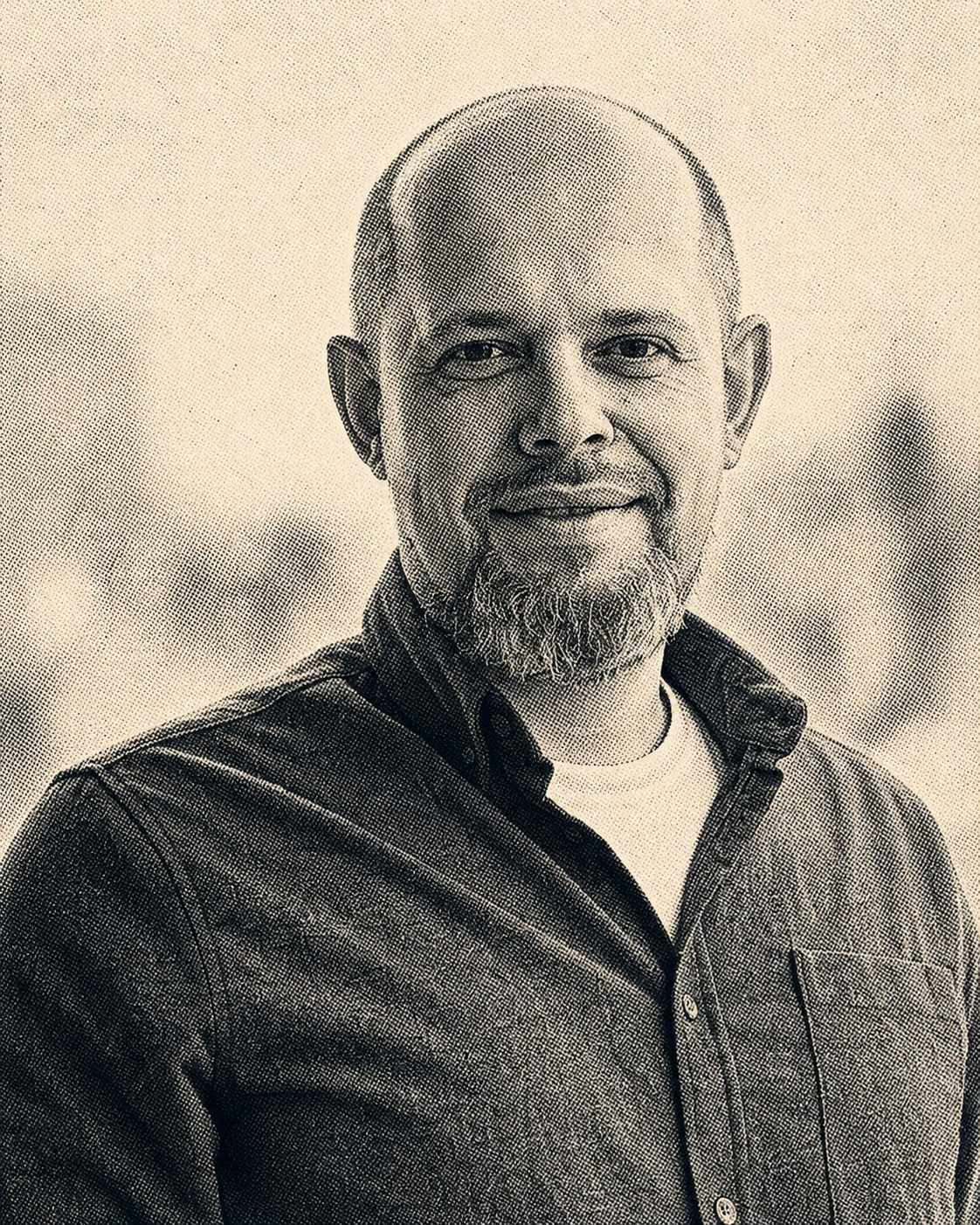
VP of Engineering
Igor Lyfar
A statement of role, responsibility, and production philosophy.
If Andreii and Shakil define the destination and the standard, I identify and build the route that gets a client there — validated, observable and resilient under real conditions.
Why This Work Matters to Me
My part of MEAIOW is the least visible, and in some ways the most personal. Every client who trusts an AI agent with a real decision is trusting that someone, somewhere behind that decision, is watching closely enough to catch what should never be allowed to happen. That someone is my team.
I want the analysts, case handlers and operators who rely on MEAIOW’s agents every day to be able to forget the system is even being monitored, because it is being monitored so well. To me, reliability is not a technical metric before it is anything else. It is a form of respect for every person standing downstream of a decision an agent makes on their behalf.
My Role and Responsibility at MEAIOW
As VP of Engineering, I am responsible for the day-to-day production engineering of MEAIOW’s platforms: ensuring that what Andreii and Shakil architect and govern actually runs, at scale, in client environments, without degradation. My focus sits across four disciplines. The first is validation methodology: the practical execution of VERDICT©’s testing and assurance protocols against every deployment, not as a one-off certification, but as a continuous standard. The second is observability architecture: instrumenting every agent decision so that it can be monitored, traced and, if necessary, challenged in real time. The third is production reliability engineering: designing deployment pipelines, rollback procedures and incident response protocols so that failure is contained, diagnosed and corrected quickly rather than discovered by a client. The fourth is engineering capacity and standards: owning the technical hiring, onboarding, and coding and review standards that keep delivery quality consistent as the engineering organisation grows.
I work closely with client organisations to understand their business needs in detail, analyse current processes, uncover gaps and inefficiencies, and implement AI-supported automation that brings more structure, transparency and higher digital maturity. That means ensuring design requirements are met, overseeing the consistency of the agent and user experience across deployments, managing the engineering and validation teams responsible for delivery, and owning the CI/CD pipelines, infrastructure monitoring, performance tuning and capacity planning that keep every production system within its governed operating limits.
A large part of what I validate is invisible to a client unless it fails. Whether an agent’s memory is being acquired and encoded correctly rather than silently corrupted. Whether what it retrieves under pressure is genuinely accurate rather than a confident-sounding fabrication. Whether outdated or incorrect memory is aged out on a defined schedule rather than accumulating indefinitely. An agent’s memory is not a detail. It is most of what makes its behaviour trustworthy over time, and I am the person who proves that it holds up, deployment after deployment.
My accountability is specific and separate from Andreii’s and Shakil’s. Shakil sets the constitutional standard an agent must meet. Andreii and Shakil together architect the system so that standard can be enforced. My responsibility begins where theirs is built: I own what happens after code is written — whether it holds up under real operating conditions, with real data, at real volume, and whether the traceability the Constitution requires is actually present, tested and verifiable in production, on every day the system runs, not only on the day it was signed off.
Technical and Ethical Philosophy
Observability is an ethical commitment, not a technical nicety.
My view of engineering leadership is that an AI agent whose decisions cannot be monitored in production is not accountable, whatever the architecture promised on paper. Governance that exists only at the design stage, and is not instrumented, tested and observed in the live system, is not governance. It is an intention. My responsibility is to close that gap: to make sure the traceability Shakil’s axioms require and the architecture Shakil and Andreii define is verifiable in practice, for every client, every day.
This is also why validation, in my view, cannot be treated as a final gate before go-live. It is an ongoing discipline, applied at every stage of CONTINUUM’s engagement model, so that assurance is a property of the running system, not a certificate issued once and then filed away. I hold engineering teams to the same standard I hold the systems we build: transparent in how decisions are made, accountable for outcomes, and always able to show their working.
“Processes run smoothly, or they do not. Observability is how I know which is true, at any moment, without having to ask.”
Proof Under Load, Not Only on Paper
A validation that only ever ran in a test environment has not actually validated anything.
Part of my responsibility is continuous reliability monitoring once an agent is live: tracking how often it produces a confident-sounding answer that is not actually grounded in verified information, flagging low-confidence outputs rather than letting them pass silently, and making sure every factual claim an agent makes can, in principle, be checked against the source it drew from. That is not a one-off test carried out before launch. It is a permanent, running measurement.
The same academic research now exploring how agents can improve their own prompts, workflows and tool use over time is describing, formally, a tension I manage practically every day: how much a live, deployed agent is allowed to keep improving itself, and when it must be held stable so a client’s operations are not disrupted by a system quietly rewriting its own behaviour. I decide that boundary, deployment by deployment, and I am accountable for it.
VERDICT© is not a certificate I issue once. It is a standard I re-prove against a live system, continuously, because a validation that only ever ran in a test environment has not actually validated anything that matters to a client relying on the system in production.
“I do not care how an agent performed in a demonstration. I care whether it still performs, correctly and provably, on the busiest day a client has had all year.”
A Different Starting Point
Most validation happens once, before go-live. Mine never stops.
New agent versions at MEAIOW do not go straight from testing into a client’s live workflow. They run in shadow, in parallel with the production system, against real data and real volume, before they are ever promoted to make a decision a client depends on. It is a deliberately slower way to ship, and I hold that line even under delivery pressure, because a certificate issued once tells you a system passed a test on one day. Shadow validation tells you, continuously, whether it is still passing under the conditions it actually faces. That is the difference between assurance as a document and assurance as a fact.
AREAS OF ROLE-SPECIFIC EXPERTISE
What Igor owns.
01
Production Engineering and Delivery
Owns the day-to-day operations, delivery and technical execution of MEAIOW’s engineering department.
02
Validation Methodology
Practical execution of VERDICT©’s testing and assurance protocols against live deployments.
03
Continuous Shadow Validation
Runs new agent versions in parallel with live production traffic before promotion, so assurance is ongoing, evidenced fact rather than a one-time certificate.
04
Memory Lifecycle and Hallucination Monitoring
Verifies that agent memory is correctly acquired, encoded, retrieved and aged out, and continuously monitors factual grounding and confidence in live outputs.
05
Observability and Monitoring Architecture
Instrumentation that makes every agent decision traceable, monitorable and challengeable in real time.
06
Reliability Engineering and Incident Response
Deployment pipelines, rollback procedures, on-call protocols and root-cause resolution that contain and correct production failure quickly.
07
CI/CD and Infrastructure Operations
Owns build, release and infrastructure automation, capacity planning and performance tuning across every client environment.
08
Process Analysis and Digital Maturity
Client-facing analysis of current processes to uncover gaps, inefficiencies and automation opportunities.
09
Engineering Team Management, Standards and Escalation
Leads the engineering and validation teams responsible for delivery quality, coding and review standards, and technical escalation.
“A system that only works when someone is watching it closely is not reliable. It is lucky. My job is to make sure MEAIOW’s agents are never running on luck.”